Meeting prep on autopilot
Bottom line, up front
Sales engineers were spending hours before every call piecing together context from 5 different tools. I designed a feature that made prep automatic, and 12 out of 12 said it saved them significant time going into customer calls.
Ava is an AI agent for sales engineering and account executive teams. She connects to the tools these teams already use - Salesforce, Slack, Google Drive, Gong, and the web - and works autonomously across them to handle the research, preparation, and context-gathering that surrounds every deal.
Problem
Sales engineers were basically doing the same homework before every single meeting
Picture this. You have a customer call in 30 minutes. You open Salesforce to check the deal stage, then jump to Gong to scrub through last week's recording, then Slack to find the thread where someone mentioned a blocker, then back to a discovery doc you wrote two months ago. You do this before every call. Every single one.
That's where sales engineers were spending their days, not helping customers, just trying to remember where things stood.
“I spend half my day tracking down information and the other half in status meetings. There’s barely time left to actually help customers.”
Discovery
I talked to 12 sales engineers, and the pattern was impossible to ignore
11 out of 12 said prep was eating their time. 10 out of 12 said most of their day was manual tracking, not actual customer work. But here's the thing that mattered most: they were all doing the exact same research in the exact same order before every call. Deal status, customer background, recent activity, open questions. Every time.
That repetition was the signal. If every sales engineer follows the same prep pattern, that's something Ava could own.
Key insights
Context-gathering follows a predictable pattern. Sales engineers followed nearly identical preparation workflows before every call, needing the same types of information in the same sequence: deal status, customer background, recent activity, and open questions. That repetition was a signal. If every sales engineer was doing the same research in the same order before every meeting, that was something Ava could own.
Information exists but isn’t synthesized. The context sales engineers needed was already there, sitting in Salesforce, Gong, Slack, and discovery documents. The problem wasn’t missing information. It was the effort required to pull it together across disconnected systems before a call.
The calendar structures their day. Sales engineers organize their work around scheduled meetings. Every customer interaction starts with checking the calendar. That made calendar events a natural trigger for automated preparation. If Ava could detect an upcoming meeting, she could have prep ready before the sales engineer even thought to look for it.
AI skepticism required transparency. Sales engineers were open to AI-assisted prep, but they wanted to verify summaries before trusting them. Any solution that felt like a black box would lose users before they saw the value.
Methods: User Interviews
Design
My first idea put prep in the wrong place
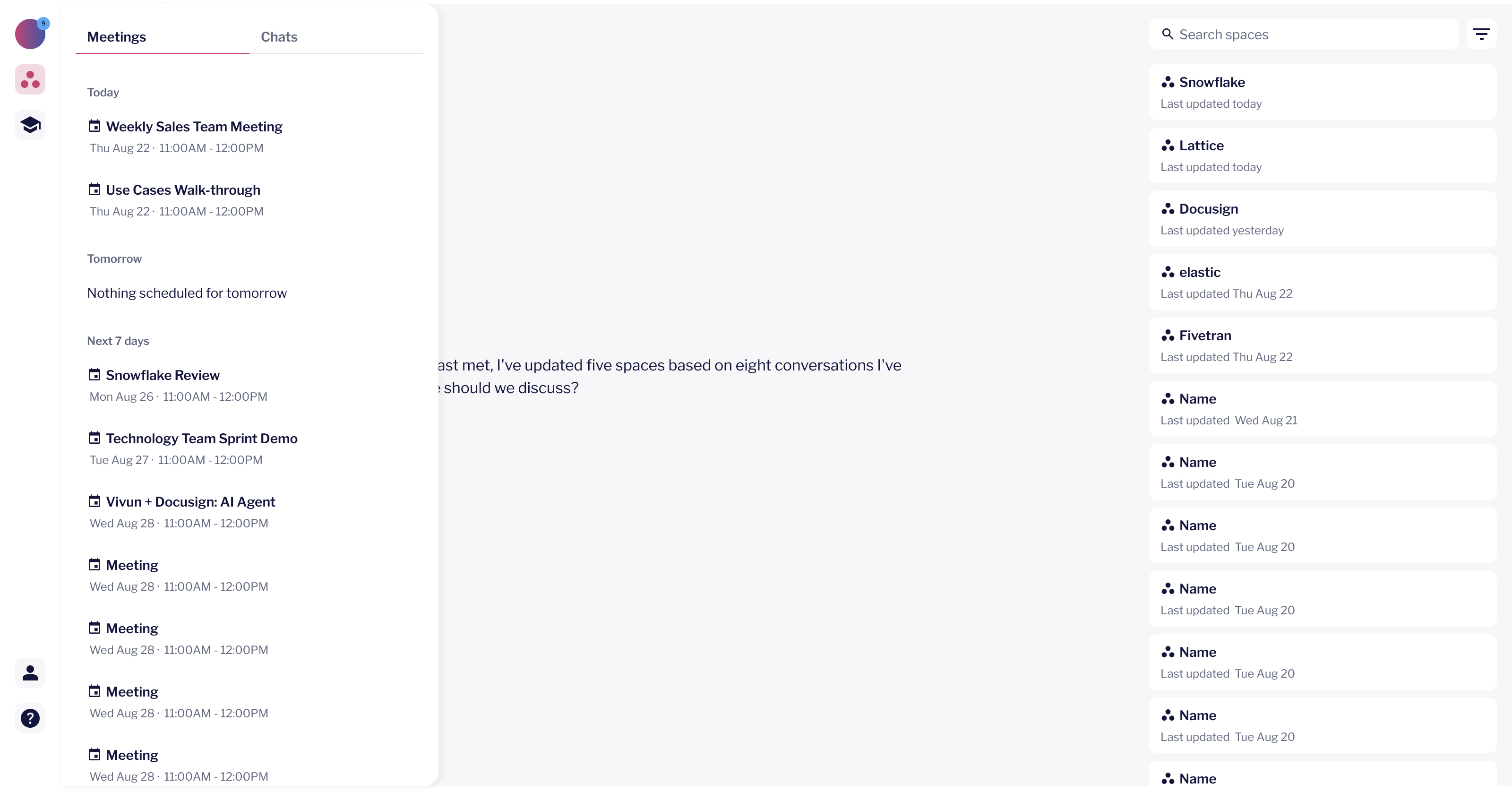
Research kept pointing to one thing: sales engineers organize their entire day around their calendar. Every customer interaction starts with checking what's coming up. So I designed a dedicated Meetings section where Ava would deliver a briefing conversationally before each call - if the calendar structures their day, meeting-centric prep seemed like the natural fit.
placeholder
View Figma storyboardsThe content was right. Deal stage, recent Gong activity, open questions, next steps. Users said that's exactly what they needed.
But in testing, people kept bouncing around. Do I go to Meetings or the deal? They'd end up in both places looking for context. And a chat message is hard to scan mid-call when someone is asking you a question.
The real problem: sales engineers live in their calendars, but they think in deals. When preparing for a call, the question in their head is "what's happening with this customer?" not "what's my next meeting?" I had the right trigger but the wrong home for the information.
Moving prep inside the deal conversation changed everything
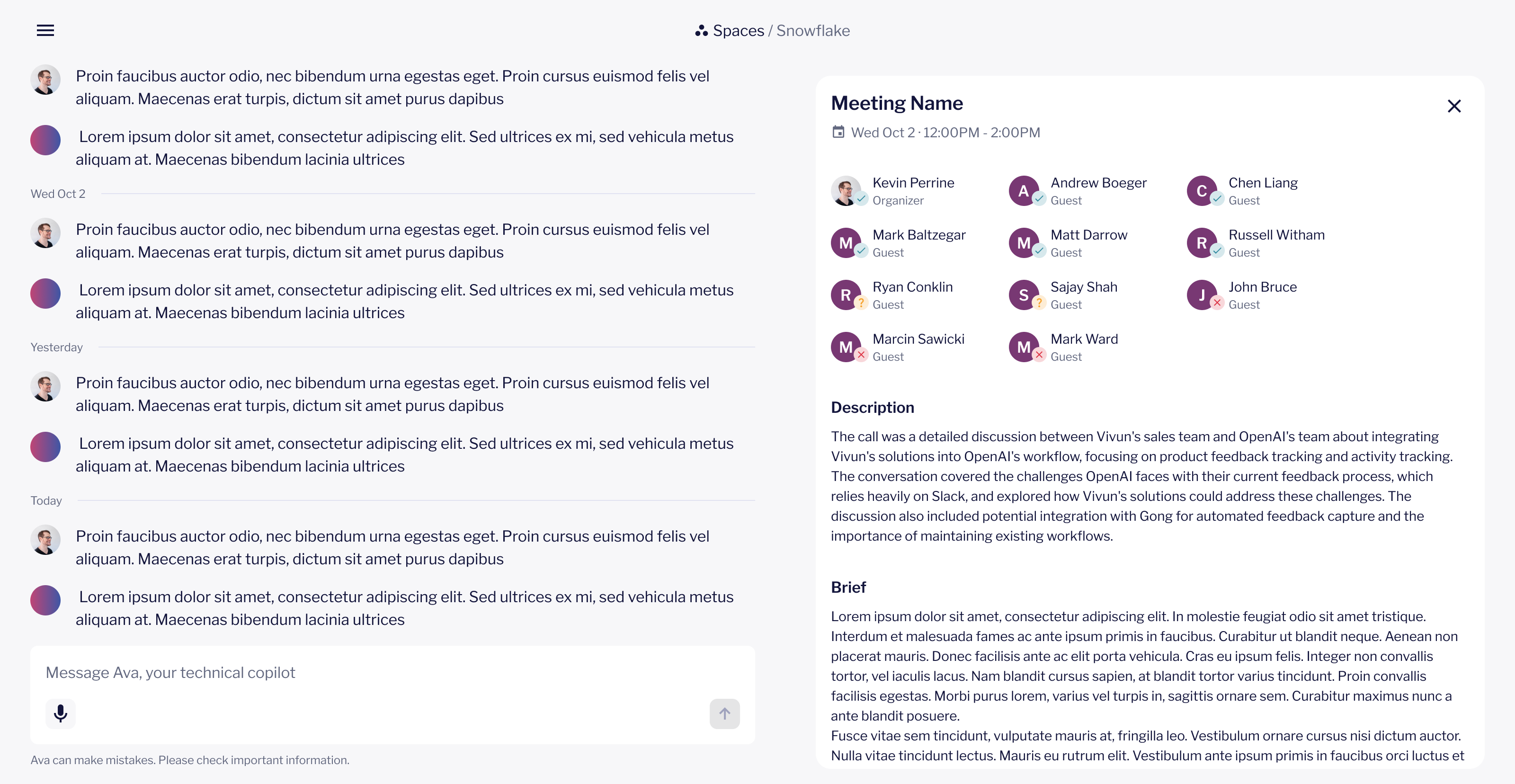
If people think in deals, prep should live in deals. When Ava detected an upcoming meeting on the calendar, she'd generate a prep artifact right inside the relevant deal thread, next to the discovery doc and Gong recordings that were already there.
 View Figma storyboards
No more deciding where to go. One place, with everything already in context. When data was missing, Ava said so directly. Every claim linked back to its source in Gong, Slack, or Salesforce, which addressed the trust concern that kept coming up in research.
For edge cases, Ava was transparent about what she didn’t have. When data was missing she said so directly, for example “I don’t have Gong recordings for this prospect yet.” For first-time meetings she pulled from publicly available information and flagged it as such. Every claim linked back to its source: Gong, Slack, or Salesforce. That addressed the trust concern from research.
A/B testing validated the approach. Users spent less time navigating, oriented faster when they opened a deal, and reported feeling more confident going into calls.
Methods: Dot voting, User Interviews, A/B Testing
Impact
Meeting prep went from something engineers scrambled to do, to something that just happened
That last number is the one that matters. Saving time is good. Walking into a customer call knowing exactly where things stand is what actually changes the outcome of a deal.
Methods: User Interviews, User Survey